THE FUTURE OF WORK PROJECT
Executive Decision-Making in the Age of Ai
& Ongoing Disruption
Providing leading practices, emerging ideas, and actionable insights into how leaders, managers, and workers can better respond to the needs of today without sacrificing the capabilities of tomorrow.
WHY THIS PROJECT EXISTS
Continuous Work Transformation
“The knowing-doing gap is real. We know we need to make better decisions about work and workers. The Future of Work Project exists to help close that gap — through rigorous research, trusted community, and actionable frameworks that leaders can actually use.”

This gap — between knowing and doing — costs organizations in layoffs, reactive hiring, and ill-timed restructuring.
It costs workers in uncertainty, displacement, and unpreparedness. The Future of Work Project is built around closing it.
CORE FOCUS AREAS
Four lenses on the future of work
1
Executive decision-making
How are VP+ and C-suite leaders deciding about workforce change?
Who is at the table — and who isn't?
Are the right data and incentives in place?
Where do decision rights actually sit?
2
Worker preparedness
How are individuals navigating AI, automation, and globalization?
What emotions and behaviors emerge under disruption?
Are workers equipped — or left behind?
What proactive steps build adaptability?
3
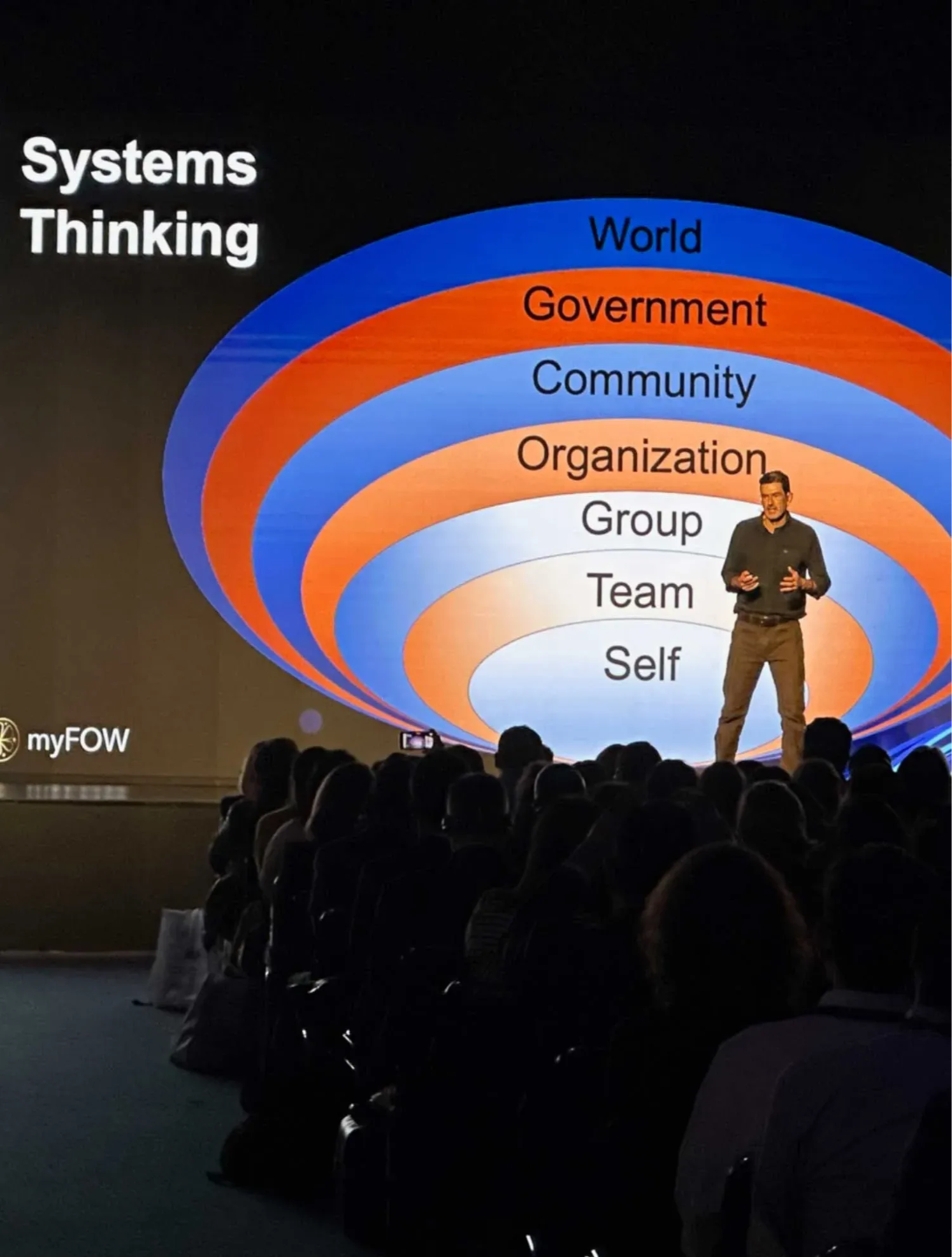
Systems thinking & design
Individual decisions don't always aggregate to good macro outcomes
Applying UX and human-factors thinking to organizational design
How structure shapes behavior — and how to change it
4
Social capital & networks
Org network analysis as a lens on how work actually flows
The role of relational capital in organizational resilience
Building community across silos: HR, IT, leadership, analytics
A CORE FRAMEWORK
The 10 Dimensions of Employee Experience
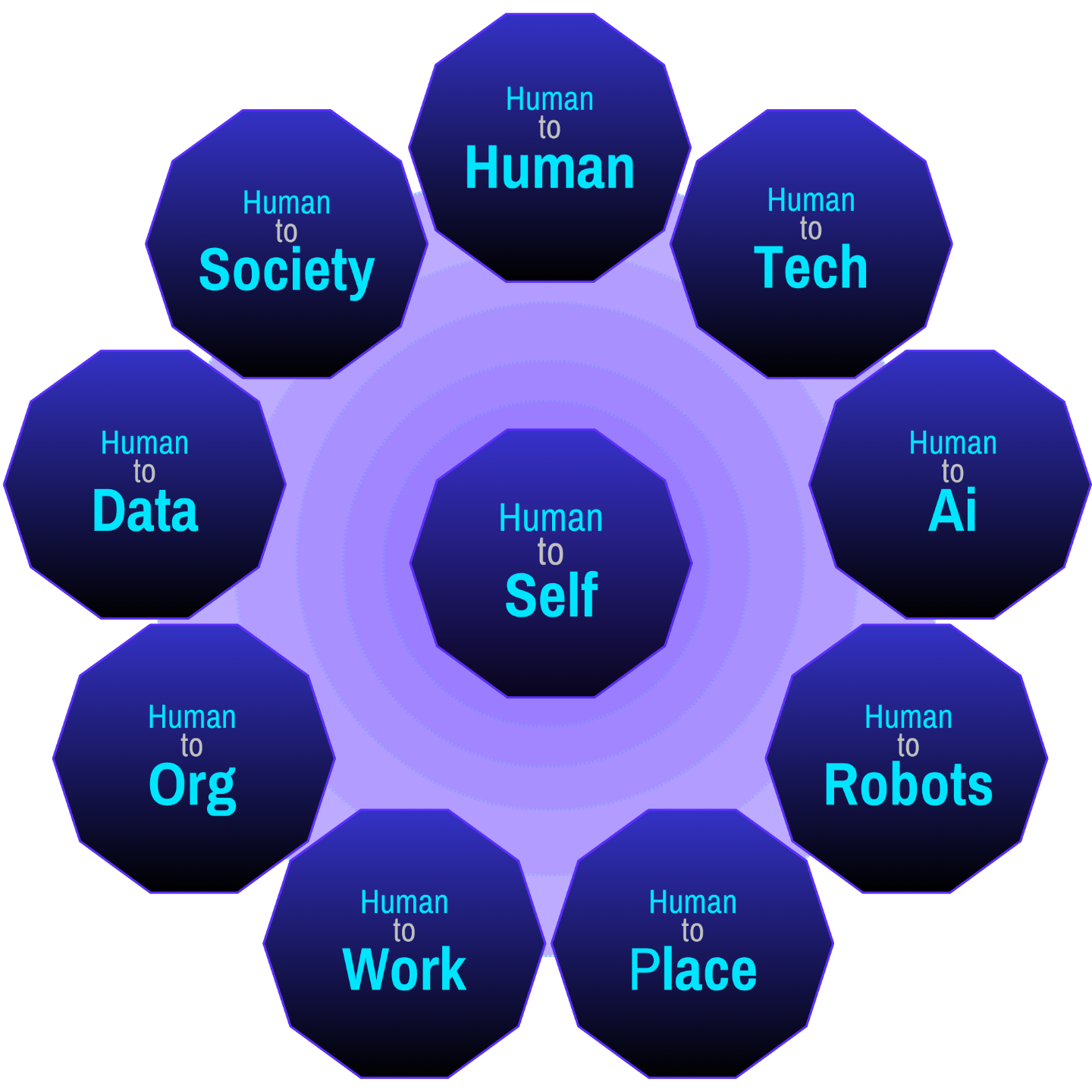
Modern Employee Experience is a relational ecosystem. An employee doesn’t work in a vacuum; they have an ongoing relationship with each of these ten dimensions.
Understanding this enables decisions and actions to consider trade-offs, ultimately optimizing for a positive and productive employee experience over time.
For example, a decision in the Human to Tech domain should be evaluated for its ripple effect on the Human to Work, Human to Org, and crucially, the Human to Self dimensions.
Consciously managing this ecosystem is both a challenge and opportunity for leaders across the organization.
RESEARCH IN PROGRESS
Rigorous inquiry. Actionable outputs.

Launching Now
Leader Readiness Survey
Building on structured interviews with VPs and C-suite leaders across HR, IT, and operations, a new quantitative survey instrument is being developed and deployed through CHRO roundtables and peer networks.
The focus: how prepared are senior leaders to navigate AI-driven workforce transformation — and what's holding them back?

Scientist-practitioner model
Grounded in organizational science, IO psychology, and org network analysis — built for practitioners, not journal readers.
Qualitative + quantitative
Starting from rich qualitative interviews and evolving toward scalable, shareable data to credibly drive executive conversations.

Community-connected

Nicholas Garbis
ABOUT Al ADAMSEN
Al Adamsen
Founder & CEO | Analyst, Advisor, Creator
Al Adamsen's work is shaped by a personal understanding of transformation. After years of untangling limiting beliefs rooted in financial insecurity and performance-based identity, he arrived at a core conviction: a person's worth is unchallengeable — by others, and by the inner critic.
For nearly three decades, that conviction has driven his professional mission: helping leaders, teams, and individuals move through disruption with greater clarity, resilience, and self-awareness. He works at the intersection of systems thinking, people analytics, and executive decision-making — always from a stance of compassionate curiosity.
Al is known for creating safe, generative spaces where people can show up authentically. Through what he calls OQIs — Observations, Questions, and Ideas — he partners with executives, HR leaders, coaches, and practitioners to help people feel seen, heard, and genuinely empowered.